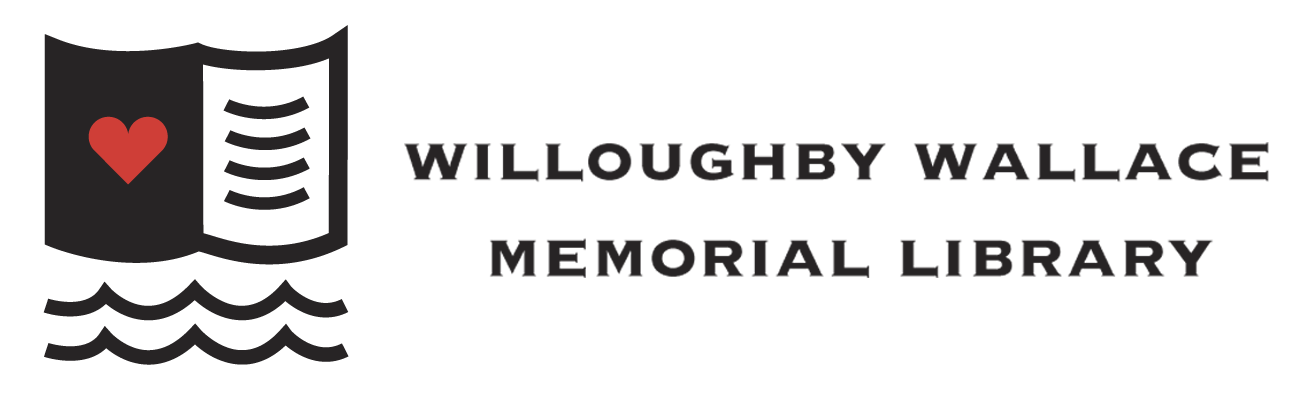
Alfred Dreyfus, Jewish Identity & Antisemitism, Past & Present
Professor Maurice Samuels, author of Alfred Dreyfus: the Man at the Center of the Affair (Yale, 2024)
in conversation with
Dr. Barnett Rubin
THU | DEC 10 | 7 PM
REGISTRATION RECOMMENDED
THIS IS AN IN-PERSON EVENT
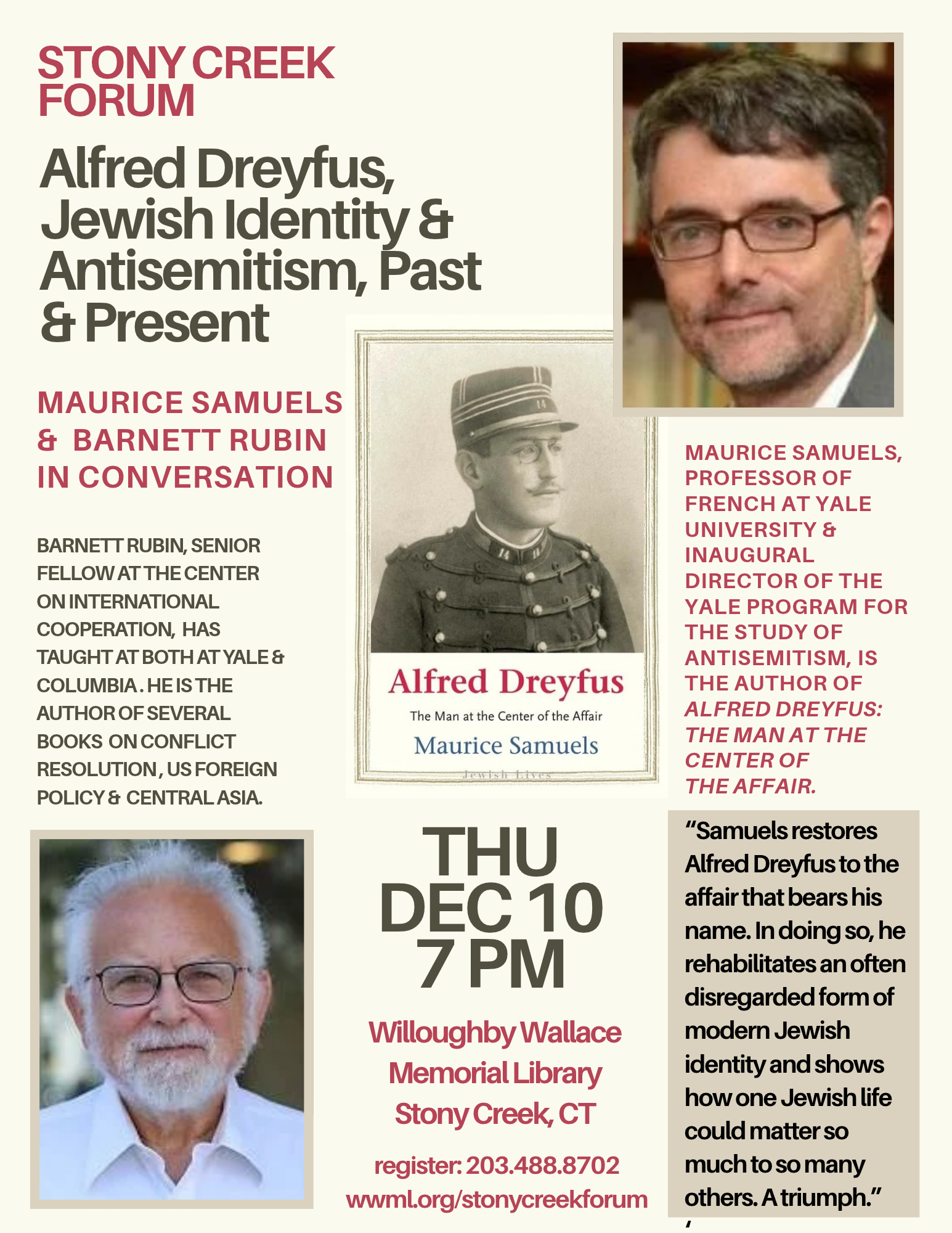
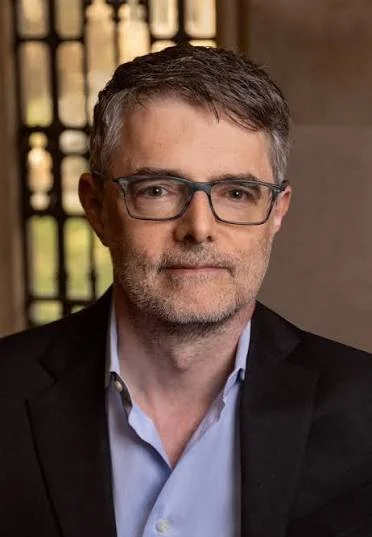
Maurice Samuels is the Betty Jane Anlyan Professor of French at Yale University, where he also chairs the Department of French. In 2011, he became the inaugural director of the Yale Program for the Study of Antisemitism, one of the only academic programs in the United States dedicated to studying both historical and contemporary forms of antisemitism.
A native of Chicago, he received his A.B. summa cum laude from Harvard in 1990, after which he spent a year studying in Paris at the École normale supérieure and writing in cafés. He then worked for three years in Hollywood, where he rejected screenplays for a living (he has been trying to repay this karmic debt ever since). He then returned to Harvard for his Ph.D. in French, which he was awarded in 2000. He taught for six years at the University of Pennsylvania before moving to Yale in 2006.
A specialist of the literature and culture of nineteenth-century France, he has written five books: Alfred Dreyfus: The Man at the Center of the Affair (Yale University Press, 2024), The Betrayal of the Duchess (Basic Books, 2020), The Right to Difference (University of Chicago Press, 2016), Inventing the Israelite (Stanford University Press, 2010), and The Spectacular Past (Cornell University Press, 2004). He has also edited anthologies of Jewish literature in both French and English. He is the recipient of the John Simon Guggenheim Fellowship and the MLA's Scaglione Prize for the best book in French studies (for both Inventing the Israelite and The Right to Difference) and the Cullman Center for Scholars and Writers Fellowship.
He currently lives in Branford, CT and New York, but spends part of every summer working at the Bibliothèque Nationale in Paris.
In Alfred Dreyfus: The Man at the Center of the Affair, new in the acclaimed Yale Jewish Lives series, Maurice Samuels gives readers new insight into Dreyfus himself. Drawing on an archive of more than 3000 documents and objects donated by the Dreyfus family, Samuels tells the story of Dreyfus’s early life in Paris, his promising career as a French officer, the false accusation leading to his imprisonment, the fight to prove his innocence that divided the French nation, and his life of quiet obscurity after World War I. Restoring the man himself to the center of the affair, Samuels emphasizes Dreyfus’s personal courage, heroic resistance to torture, and deep understanding of the historic importance of his case.
Analyzing Dreyfus’s complex relationship to Judaism and to antisemitism over the course of his life, Samuels argues that Dreyfus was not an “assimilated” Jew. Instead, he epitomized a new model of Jewish identity made possible when France became the first European nation to grant Jews full legal equality. Relying on Jewish newspapers in French, English, German, Yiddish, and Hebrew, this book also explores the profound effect of the Dreyfus Affair on the lives of Jews around the world.
Of the book’s relevance in our own time, Samuels writes: “The life of Dreyfus forces us to consider what it means when the institutions of liberal democracy come under assault and when half a nation commits to believing a lie. The life of Dreyfus also allows us to understand what it takes for truth to triumph, and how a nation can emerge from political crisis with its faith in its institutions intact. As antisemitism and right-wing nationalism stage a comeback around the world today, the affair has much to tell us not only about the causes of hatred, but also about the ways it can be resisted.”
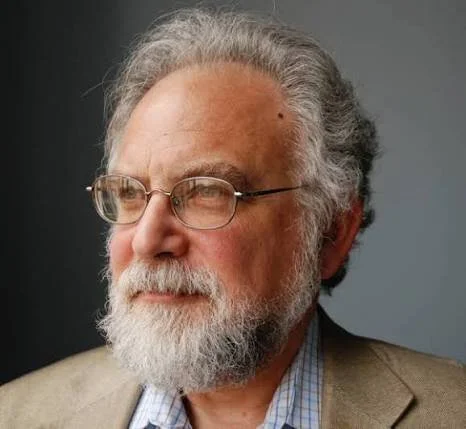
Dr. Barnett R. Rubin is a Distinguished Fellow at Center for International Cooperation, where he previously directed the Afghanistan Pakistan Regional Program. During 1994-2000 he was Director of the Center for Preventive Action, and Director, Peace and Conflict Studies, at the Council on Foreign Relations in New York. Rubin was Associate Professor of Political Science and Director of the Center for the Study of Central Asia at Columbia University from 1990 to 1996. Previously, he was a Jennings Randolph Peace Fellow at the United States Institute of Peace and Assistant Professor of Political Science at Yale University.
From April 2009 until October 2013, Dr. Rubin was the Senior Adviser to the Special Representative for Afghanistan and Pakistan in the U.S. Department of State. In November-December 2001 Rubin served as special advisor to the UN Special Representative of the Secretary General for Afghanistan, during the negotiations that produced the Bonn Agreement.
Dr. Rubin received a Ph.D. (1982) and M.A. (1976) from the University of Chicago and a B.A. (1972) from Yale University. He also received a Fulbright Fellowship to study at the Ecole des Hautes Etudes en Sciences Sociales in Paris in 1977-1978. He is founder and chair of the Conflict Prevention and Peace Forum (a program of the Social Science Research Council). He was a founding member of the Executive Board of Asia Watch, now Human Rights Watch/Asia. During 1996-98 he served on the Secretary of State’s Advisory Committee on Religious Freedom Abroad.
Dr. Rubin is the author of several book, including Afghanistan from the Cold War through the War on Terror (2013), Post-Soviet Political Order: Conflict and State Building (1998); Toward Comprehensive Peace in Southeast Europe: Conflict Prevention in the South Balkans (1996), and The Search for Peace in Afghanistan: From Buffer State to Failed State (1995). Dr. Rubin has written numerous articles and book reviews on Afghanistan, South and Central Asia, U.S. foreign policy, conflict prevention, state formation, and human rights. His articles have appeared in Foreign Affairs, Foreign Policy, The New Yorker, The New York Times, The Washington Post, and The New York Review of Books, as well as academic journals.
He also writes on war and peace, at home and around the world, in his Substack newsletter, Appointed Times.